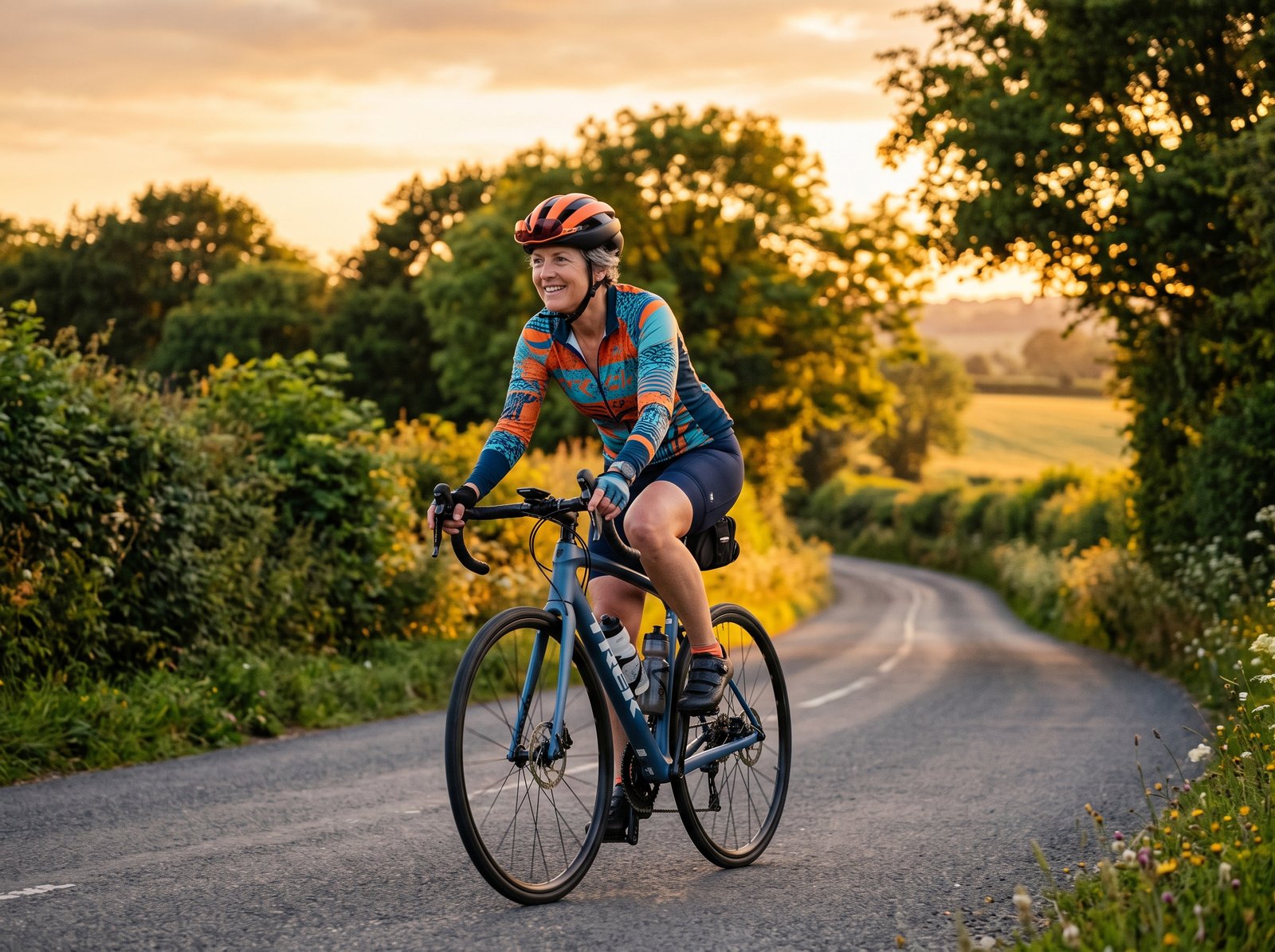
How to Start Cycling After 50: The Complete Guide for Older Adults
Most people who ask about how to start cycling after 50 have already talked themselves halfway out of it. Here’s the short answer: not only can you start, but cycling is one of the few exercises that actually gets more suitable for you as you age. Low joint impact, adjustable intensity, and measurable fitness gains make it a standout choice for how to start cycling after 50.
In 2018, King’s College London studied 125 amateur cyclists aged 55 to 79. The finding that stopped sports scientists: their muscle mass, strength, metabolic health, and immune function were indistinguishable from people 30 years younger (British Journal of Sports Medicine, 2018). They weren’t ex-pros. They were regular people who had kept pedaling.
This guide covers everything you need to start cycling confidently after 50 — from choosing the right bike type to an 8-week beginner plan that builds fitness without wrecking your joints.
- Cycling puts up to 85% less stress on joints than running — making it ideal for adults with knee or hip concerns
- A 2017 BMJ Open study found regular cyclists have a 45% lower risk of cancer and 46% lower cardiovascular disease risk
- Start with 20-30 minute rides, 3x per week, and increase by no more than 10% total time each week
- You don’t need a road bike — a hybrid or e-bike is often a better fit for adults starting after 50
- Most beginners see measurable cardiovascular improvement within 6-8 weeks of consistent riding
Is It Too Late to Start Cycling After 50?
In 2017, researchers at the University of Glasgow tracked 263,000 adults over five years. Regular cyclists had a 45% lower risk of cancer and a 46% lower risk of cardiovascular disease compared to non-cyclists (BMJ Open, Celis-Morales et al., 2017). Age was not a limiting factor in those benefits. The protective effect showed up whether participants started cycling at 30 or 65.
The body doesn’t stop responding to training after 50. It adapts more slowly, and it needs more recovery time between sessions. But it adapts. What changes isn’t your ceiling — it’s how carefully you need to build toward it.
The American College of Sports Medicine recommends never increasing total weekly training volume by more than 10% in a single week. For older adults, staying below that ceiling dramatically reduces overuse injury risk.
The real barrier for most beginners over 50 isn’t physical — it’s the assumption that starting late means starting too late. Cycling for weight loss studies consistently show adults in the 55-70 age range respond as well to aerobic training as younger cohorts when intensity and recovery are matched to their fitness level.
What Are the Health Benefits of Cycling for Older Adults?
The World Health Organization’s 2020 Physical Activity Guidelines recommend adults aged 65 and over get 150-300 minutes of moderate-intensity aerobic activity each week. People learning how to start cycling after 50 will find cycling at a comfortable conversational pace sits exactly in that moderate-intensity band — and unlike walking, it can cover enough distance to stay interesting.
Heart health — Improves cardiac output and lowers resting heart rate within weeks
Joint-friendly — Weight supported by the saddle, not knees or hips
Cognitive protection — Aerobic exercise linked to reduced dementia risk in adults 60+
Muscle retention — Cycling preserves leg muscle mass, which declines ~3-8% per decade after 50
Better sleep — Moderate aerobic exercise improves sleep quality and duration in older adults
Weight control — A 60-minute moderate ride burns 400-600 calories depending on body weight and terrain
One benefit that doesn’t get enough attention: balance and fall prevention. Regular cycling strengthens the stabilizer muscles around the hip and knee. A 2019 Cochrane review found that balance and strength training reduces fall risk in older adults by up to 23% — and cycling contributes directly to both.
How to Choose Your First Bike After 50
The most common mistake people make when figuring out how to start cycling after 50 is buying the wrong bike type — usually a road bike with drop handlebars that forces an aggressive forward lean, which then aggravates lower back and neck pain within the first few rides. The right choice depends entirely on where and how you want to ride.
Hybrid Bike — Best All-Round Choice
An upright riding position, flat handlebars, and moderately wide tires make hybrid bikes the most comfortable option for adults starting out. They handle roads, packed gravel, and light trails without requiring technical skill. For cycling for older adults starting on mixed terrain, this is the most versatile choice.
E-Bike — Best for Those Returning After a Long Break
The electric assist on an e-bike doesn’t do the work for you — it amplifies your effort. This means you can ride further and tackle hills without the cardiovascular system hitting its ceiling too quickly. For adults managing cardiac conditions or recovering from knee surgery, an e-bike removes the barrier of intimidating terrain without removing the exercise.
Road Bike with a Relaxed Geometry
If you plan to ride longer distances and want to progress toward sportives or gran fondos, a road bike with an endurance geometry (longer head tube, shorter reach) provides an upright-enough position without sacrificing efficiency. Not the right first choice, but a logical second bike.
Recumbent Bike
For adults with significant lower back issues or balance concerns, a recumbent positions you in a reclined seat with pedals in front. Zero saddle pressure on the spine, maximum comfort. The trade-off is size, price, and the fact that they’re slower on hills.
Before buying anything, get a bike fitting at a local shop. A saddle that’s 1cm too high or too low causes knee pain within weeks. Most shops offer free basic fittings with a purchase. For older adults, a professional bike fit is worth the cost — it prevents the injuries that end most beginner cycling journeys early.
How to Start Cycling After 50: Your First 8-Week Plan
If you’re figuring out how to start cycling after 50, this how to start cycling after 50 plan follows the ACSM’s 10% weekly progression rule and builds around three rides per week with full recovery days between sessions. Start at whatever feels easy — the goal in weeks 1-3 is to establish the habit, not push fitness.
3x 20-minute rides. Flat route, conversational pace. You should be able to speak in full sentences throughout. Focus on cadence over speed.
3x 25-minute rides. Add one gentle hill per ride. Heart rate should stay below 70% of max (roughly: 220 minus your age). Rest 48h between rides.
2x 30-minute rides + 1x 45-minute longer ride. Introduce your first slightly harder effort: 3-5 minutes at a pace where conversation becomes difficult.
2x 35-minute rides + 1x 60-minute long ride. By week 8, most beginners notice measurable improvements in resting heart rate and climbing ability.
Fueling matters more after 50 than it did at 30. Your body’s ability to synthesize protein post-exercise slows with age, which means the recovery window after a ride becomes more important. For rides over 60 minutes, aim for 20-30g of protein within 30 minutes of finishing. For more on what to eat around your rides, see our complete cycling nutrition guide.
A basic heart rate monitor is the single most useful tool for cycling for older adults just starting out. Training by heart rate — rather than speed or distance — prevents the most common beginner mistake: going too hard, too soon, too often. Maximum heart rate estimate: 220 minus your age. Keep most rides below 70% of that number in weeks 1-4.
Essential Safety and Gear for Cycling Over 50
Skin takes longer to heal after 50 — it’s one reason safety is especially important when you how to start cycling after 50. Bones are more susceptible to fracture, and balance reflexes are slightly slower. None of this means cycling is dangerous — it means the standard gear advice becomes less optional.
Non-Negotiable Gear
- Helmet — A well-fitted cycling helmet reduces head injury risk by up to 85% in falls (Cochrane Review, 2013). Replace any helmet after a crash, even if it looks undamaged.
- Padded shorts — Saddle sores are one of the top reasons beginners quit. Padded bib shorts (with chamois) prevent the friction and pressure that cause them.
- Gloves — Protect the palms in a fall and reduce road vibration-related nerve compression in the hands.
- Front and rear lights — Even for daytime riding. A rear flashing red light makes you significantly more visible in low-contrast conditions.
Useful Additions
- Cycling glasses — Protect eyes from road debris, insects, and UV. Wraparound lenses cover peripheral vision that standard sunglasses miss.
- Mirror — A bar-end or helmet mirror reduces the need to turn your head at speed, which can affect balance in less experienced riders.
- Gel saddle cover — A cheaper alternative to new shorts if you’re not ready to commit. Not as effective long-term, but better than nothing for the first few rides.
5 Mistakes to Avoid When Learning How to Start Cycling After 50
Ego-pacing early rides leads to 3-4 days of excessive soreness and a broken habit. Slow down until it feels almost too easy — that’s the right zone for weeks 1-3.
Five minutes of easy spinning before any effort allows joints to lubricate and muscles to activate. Older tendons are less elastic and take longer to reach working temperature. Don’t skip it.
Recovery is where fitness is built. Three rides per week with rest days between is more effective than daily short rides for adults over 50, whose muscle protein synthesis after exercise is slower than in younger adults.
A saddle that’s too low creates knee pain at the front of the kneecap. Too high creates pain at the back of the knee. Get this right before your first 5 rides — not after the pain starts.
Thirst sensation diminishes with age, meaning older adults are often dehydrated before feeling thirsty. Drink 500ml in the hour before riding and sip every 15-20 minutes during rides over 45 minutes.
Frequently Asked Questions
Yes — when you how to start cycling after 50 with bad knees — cycling is one of the most joint-friendly aerobic exercises available. Because your weight is supported by the saddle rather than your knees, the compressive forces are significantly lower than walking or running. The Arthritis Foundation recommends cycling as a primary exercise for adults with knee osteoarthritis, particularly at low cadences (60-70 RPM) on flat terrain. Proper saddle height is essential — too low creates compressive knee stress.
Start with 8-12 km (5-7 miles) per ride in the first two weeks. Distance matters less than time at this stage — 20-30 minutes of continuous easy riding builds the aerobic base you need without overloading tendons and joints that haven’t been asked to cycle in years. Increase distance by no more than 10% per week. Most beginners reach a comfortable 30 km (18 miles) ride within 8-10 weeks of consistent training.
If you have a cardiac history, unmanaged hypertension, diabetes, or have been sedentary for more than 2 years, a brief check-in with your GP before starting is sensible. The American Heart Association recommends an exercise stress test for sedentary adults over 60 starting a vigorous exercise program — though cycling at a comfortable pace generally falls in the moderate-intensity category, which carries significantly lower cardiovascular risk.
Yes, though the combination of cycling and diet matters more than cycling alone. A 60-minute moderate ride burns 400-550 calories at typical adult body weights. Research consistently shows that aerobic exercise is most effective for body composition change when combined with a modest caloric deficit (300-500 calories/day). Our weight loss cycling guide covers the zone 2 training approach that maximizes fat burning specifically.
A hybrid bike is the best starting point for most adults over 50 — the upright riding position reduces lower back strain, the wider tires provide stability on varied surfaces, and flat handlebars give better control than drop bars at lower speeds. E-bikes are the best option for adults managing cardiac conditions, returning after injury, or wanting to tackle hilly terrain without high cardiovascular intensity. Avoid aggressive road bike geometries until your fitness and flexibility have adapted.
Starting cycling after 50 isn’t about recapturing youth — it’s about building a body that stays capable for the next 30 years. The research is unusually consistent on this: regular cyclists in their 60s and 70s have measurably better cardiovascular health, muscle mass, and immune function than age-matched non-cyclists. The only thing standing between you and those outcomes is the first ride.
Start shorter than you think you should. Ride slower than feels necessary. And go again two days later. That’s the whole plan.
Sources
British Journal of Sports Medicine, “Chronic exercise preserves lean muscle mass in masters athletes,” retrieved 2026-08-10, bjsm.bmj.com
BMJ Open, Celis-Morales et al., “Association between active commuting and incident cardiovascular disease, cancer, and mortality,” 2017, retrieved 2026-08-10, bmjopen.bmj.com
World Health Organization, “WHO Guidelines on Physical Activity and Sedentary Behaviour,” 2020, who.int
American College of Sports Medicine, “ACSM’s Guidelines for Exercise Testing and Prescription,” 11th ed., 2021
Cochrane Review, “Helmets for preventing head and facial injuries in bicyclists,” 2013
One Response