How to Ride a Bike: 7 Easy Steps for Adults and Kids
Balance first, pedals second. This step-by-step guide shows exactly how to ride a bike, whether you are an adult learning for the first time or teaching a child.
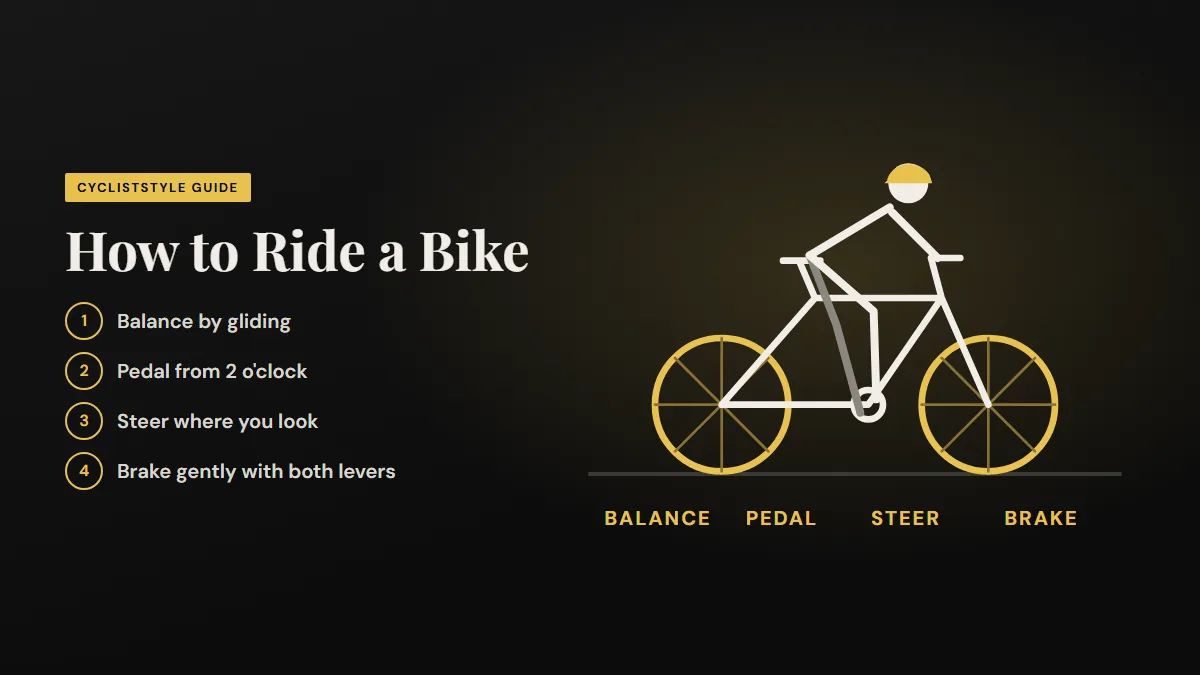
How to ride a bike: lower the saddle so both feet touch the ground, push off and glide with your feet up to learn balance, then put one pedal at 2 o’clock and push down to start. Look ahead, not at the wheel, steer with gentle leans, and squeeze both brakes evenly to stop.
Learning how to ride a bike is mostly about one skill: balance. Once your body learns to keep a moving bike upright, pedalling, steering and stopping fall into place quickly. That is why the method below starts with gliding, not pedalling, and why it works just as well for a nervous adult as for a five-year-old.
You need about an hour for your first session, a bike that fits, a helmet and a flat, quiet space. Here is the whole process.
How to Ride a Bike in 7 Steps
What You Need Before You Start
- A bike that fits. Sitting on the saddle, you should reach the ground with the balls of both feet. A smaller frame is easier to learn on than a big one.
- A helmet that fits properly. Level on your head, about two finger-widths above your eyebrows, straps forming a V under each ear. Read how a bike helmet can save your life.
- Closed shoes and comfortable clothes. Avoid loose trousers that can catch in the chain.
- A safe practice area. Flat, smooth and away from cars.
- Optional: gloves and knee pads if a fall worries you.
How to Ride a Bike as an Adult
Plenty of adults never learned as children, and many more stopped riding for years. The skill is the same at any age; the difference is that adults tend to tense up because a fall feels like a bigger deal. These adjustments make learning how to ride a bike as an adult far easier:
- Turn your bike into a balance bike. Lower the saddle fully. If you are comfortable using a pedal spanner, remove both pedals (the left pedal unscrews clockwise) so nothing knocks your shins while you glide.
- Keep sessions short. Twenty to thirty minutes of focused practice beats a long, tiring afternoon.
- Look up and relax your grip. A death grip on the handlebars makes the bike wobble more, not less.
- Glide down a very gentle slope. A slight grassy incline gives you speed without pedalling, and speed is what makes a bike stable.
If you are returning to cycling later in life, our guide on how to start cycling after 50 covers bike choice, comfort and a gentle training plan. When you are ready for your own bike, see our picks for the best women’s commuter bikes.
How to Teach a Child to Ride a Bike
Children learn how to ride a bike fastest when balance comes first. The same steps apply, with a few changes:
| Stage | What to do |
|---|---|
| Balance bike | A pedal-free balance bike, or a small bike with the pedals removed, lets toddlers learn to glide long before they can pedal. |
| First pedal bike | Choose by inseam, not age, so your child can touch the ground. See the best kids bikes by age. |
| Letting go | Hold your child’s shoulders or the back of their top, not the handlebars, so they steer for themselves. Let go once they pedal steadily. |
| Practice | Short, fun sessions. Stop while they are still enjoying it. |
Many parents and cycling instructors now skip training wheels, because a bike that cannot lean never teaches balance. For helmet fit and safety basics for young riders, see the American Academy of Pediatrics’ guide to bicycle safety for children on HealthyChildren.org. Riding together with a toddler who is too young to learn yet? See our guide to biking with a toddler.
Common Mistakes When Learning to Ride a Bike
- Saddle too high. If your feet cannot reach the ground, every wobble feels like a fall.
- Looking at the front wheel. You go where you look. Keep your eyes up and ahead.
- Going too slowly. A bike is most stable when it is moving. A little speed makes balancing easier.
- Grabbing one brake hard. Snatching the front brake alone can stop the bike abruptly. Squeeze both levers gently.
- Starting with your pedal at the bottom. Begin with the pedal at about 2 o’clock so your first push actually moves you forward.
- Practising for too long. Tired riders wobble. End the session on a good attempt.
How Long Does It Take to Learn to Ride a Bike?
There is no fixed timeline. Some people glide on their first try and pedal within the same session; others, especially nervous adults, need several short sessions spread over a week or two. Progress usually comes in this order: gliding a few metres, gliding with your feet up, pedalling in a straight line, then turning and stopping with control.
Before you ride on roads, learn the traffic basics. The League of American Bicyclists’ Smart Cycling program teaches safe road riding, and many local bike shops and clubs run beginner classes.
Once you can ride confidently, keep it fun: short rides on quiet paths build the habit. When you want to ride further and more smoothly, our cycling cadence guide explains how to pedal more efficiently, and padded shorts such as our best padded bike shorts for women make longer rides more comfortable.
How to Ride a Bike: FAQ
How long does it take to learn how to ride a bike?
It depends on the person. Many beginners can glide after a short practice session and pedal on their own within a few sessions. Adults who feel nervous often need more time, so keep sessions short and practise regularly rather than all at once.
Is it harder to learn to ride a bike as an adult?
Adults are usually not slower at the skill itself, but fear of falling makes them stiffer. Starting with a lowered saddle and gliding before pedalling removes most of that fear, because your feet can reach the ground at any moment.
Should kids use training wheels?
Training wheels stop a bike from leaning, so children do not learn balance with them. A balance bike, or a pedal bike with the pedals removed, teaches balance first and usually makes the switch to pedalling easier.
What is the easiest way to learn to ride a bike?
The glide method: lower the saddle, push along with your feet, then lift them and coast. Once you can balance for a few seconds, put the pedals back to work. Balance is the hard part; pedalling comes quickly after it.
What size bike do I need to learn on?
Choose a bike where you can sit on the saddle with the balls of both feet on the ground. For children, go by inseam rather than age, see our guide to the best kids bikes by age.
Do I need a helmet to learn to ride a bike?
Yes. Beginners fall more often, usually at low speed, and a properly fitted helmet protects your head when they do. It should sit level, about two finger-widths above your eyebrows, with the chin strap snug.
One Response