How a Bike Helmet Can Save Your Life: What the Research Actually Shows
It’s easy to treat a bike helmet as a formality rather than real protection, but the actual protective effect comes down to hard clinical evidence, not marketing claims. Multiple large-scale studies, including a systematic review of 40 studies covering over 64,000 injured cyclists, have measured exactly how much a helmet changes your odds in a crash — and the numbers are bigger than most riders expect.
CyclistStyle is reader-supported. The link below is an Amazon affiliate link — if you buy through it, we may earn a small commission at no extra cost to you.
A properly-fitted helmet reduces head and brain injury risk by 63-88%, cuts serious head injury risk by 60%, and reduces the overall rate of cyclists killed or seriously injured by 34%. Fit matters almost as much as the helmet itself — a poorly-fitted helmet doubles head injury risk compared to a well-fitted one in the same crash.
1. What the Research Actually Shows
A 2023 systematic review published in Scientific Reports, drawing on data from over 64,000 injured cyclists across 40 studies, found that helmets reduce head injury by 48%, serious head injury by 60%, traumatic brain injury by 53%, and facial injury by 23%. Across all crash types — including ones involving cars — helmet use cut the total number of cyclists killed or seriously injured by 34%.
A separate Cochrane review looking specifically at head, brain, and severe brain injury found an even larger effect: a 63-88% reduction, consistent across age groups and countries. These aren’t small margins — they represent some of the strongest injury-prevention evidence for any single piece of safety gear in any sport.
2. How a Helmet Actually Protects Your Head
A modern helmet works in layers, and each one does a different job during a crash:
- Outer shell — a hard polycarbonate layer that spreads impact force across the helmet surface instead of concentrating it on one point of your skull.
- EPS foam core — the thick foam beneath the shell crushes and deforms on impact, converting crash energy into heat instead of transferring it directly to your brain.
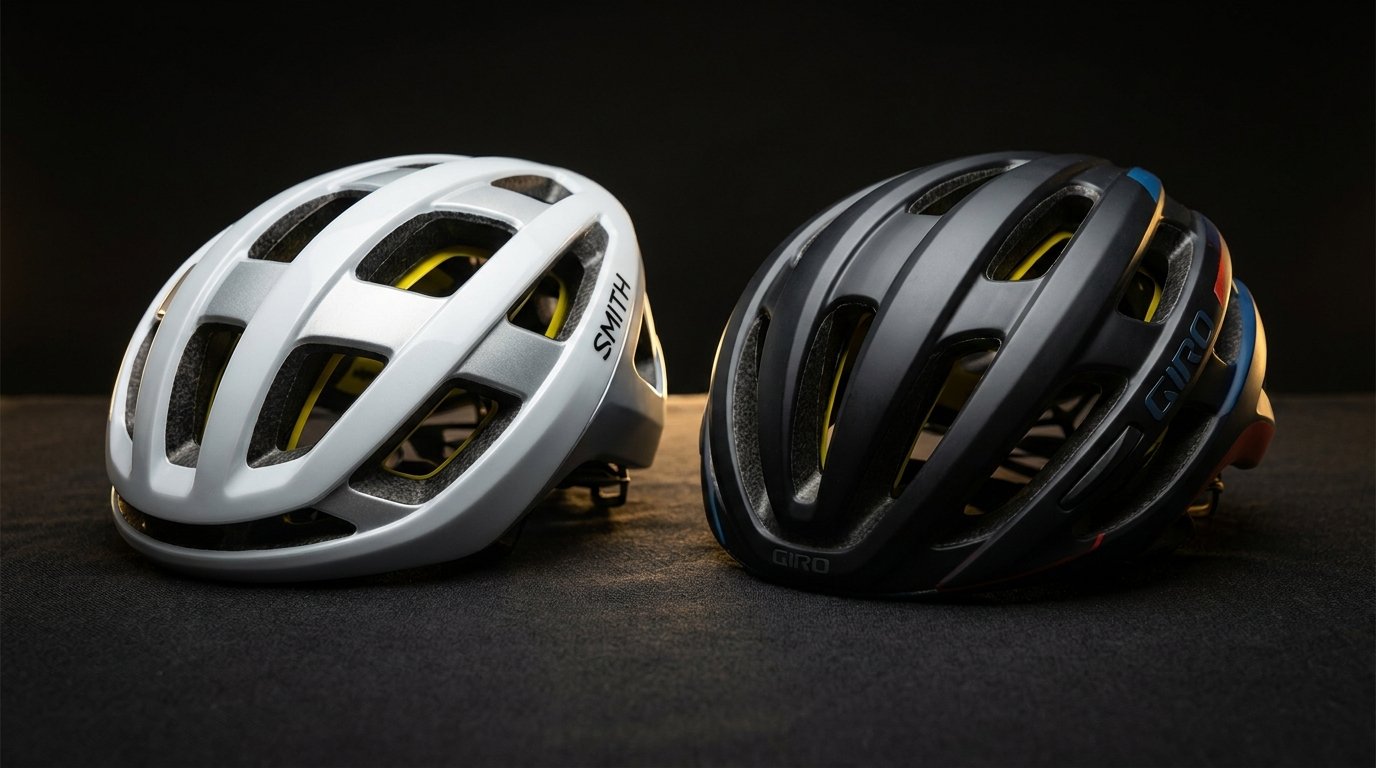
- MIPS liner — a low-friction layer inside the foam that lets the helmet’s interior rotate slightly independent of your head during an angled impact, reducing the rotational force that’s specifically linked to concussions. See our Smith Signal vs Giro Agilis MIPS comparison for how this plays out in two real helmets.
- Retention system — the fit dial and straps that keep the helmet correctly positioned. None of the above matters if the helmet isn’t actually on your head correctly when you crash.
3. Why Fit Matters as Much as the Helmet
One of the most important findings in helmet research gets the least attention: fit. Studies show children whose helmets fit poorly face roughly double the head injury risk in a crash compared to children with a well-fitted helmet — the same effect likely applies to adults. A helmet that’s too loose can shift or come off entirely on impact, and one that sits too far back exposes the forehead, one of the most commonly injured areas.
A correctly fitted helmet sits level on your head (not tilted back), covers your forehead with about two finger-widths of space above your eyebrows, and doesn’t shift when you shake your head with the straps buckled.
Fox Racing Speedframe
MIPS · Virginia Tech 5-StarIf you’re convinced it’s time to upgrade, the Speedframe is independently ranked #4 overall by Virginia Tech’s helmet safety lab — see our full Best MTB Helmets for Men and Women comparison for how it stacks up against other picks.
Check Price on Amazon →4. Frequently Asked Questions
Does a more expensive helmet protect you better?
Not necessarily in raw safety terms — budget helmets with MIPS can score well on independent tests like Virginia Tech’s lab. Price mostly buys weight savings, ventilation, and comfort, not dramatically better protection.
Do I need to replace my helmet after every crash?
Yes — the EPS foam that absorbs impact energy doesn’t return to its original shape once crushed, even if there’s no visible damage. Manufacturers and safety researchers recommend replacing a helmet after any real impact.
How often should I replace a helmet that hasn’t been in a crash?
Most manufacturers recommend replacing a helmet every 5-8 years even without a crash, since foam and shell materials degrade slowly from UV exposure, sweat, and temperature changes.
5. How a Bike Helmet Can Save Your Life: The Bottom Line
Our Take
This isn’t a marketing question — it’s a measured, repeated finding across decades of research: a properly-fitted helmet cuts your risk of serious head injury by more than half. If you’re shopping for one, start with our Best Bike Helmets guide or the MTB-specific picks in our Best MTB Helmets for Men and Women comparison.