Smart Trainer Buyer’s Guide 2026
Best Smart Trainers 2026
Top Direct-Drive Picks for Zwift & Indoor Cycling
Five direct-drive smart trainers tested from $399 to $1,899 — with honest breakdowns of power accuracy, noise level, ERG performance, and which one is worth the jump in price for serious indoor riders.
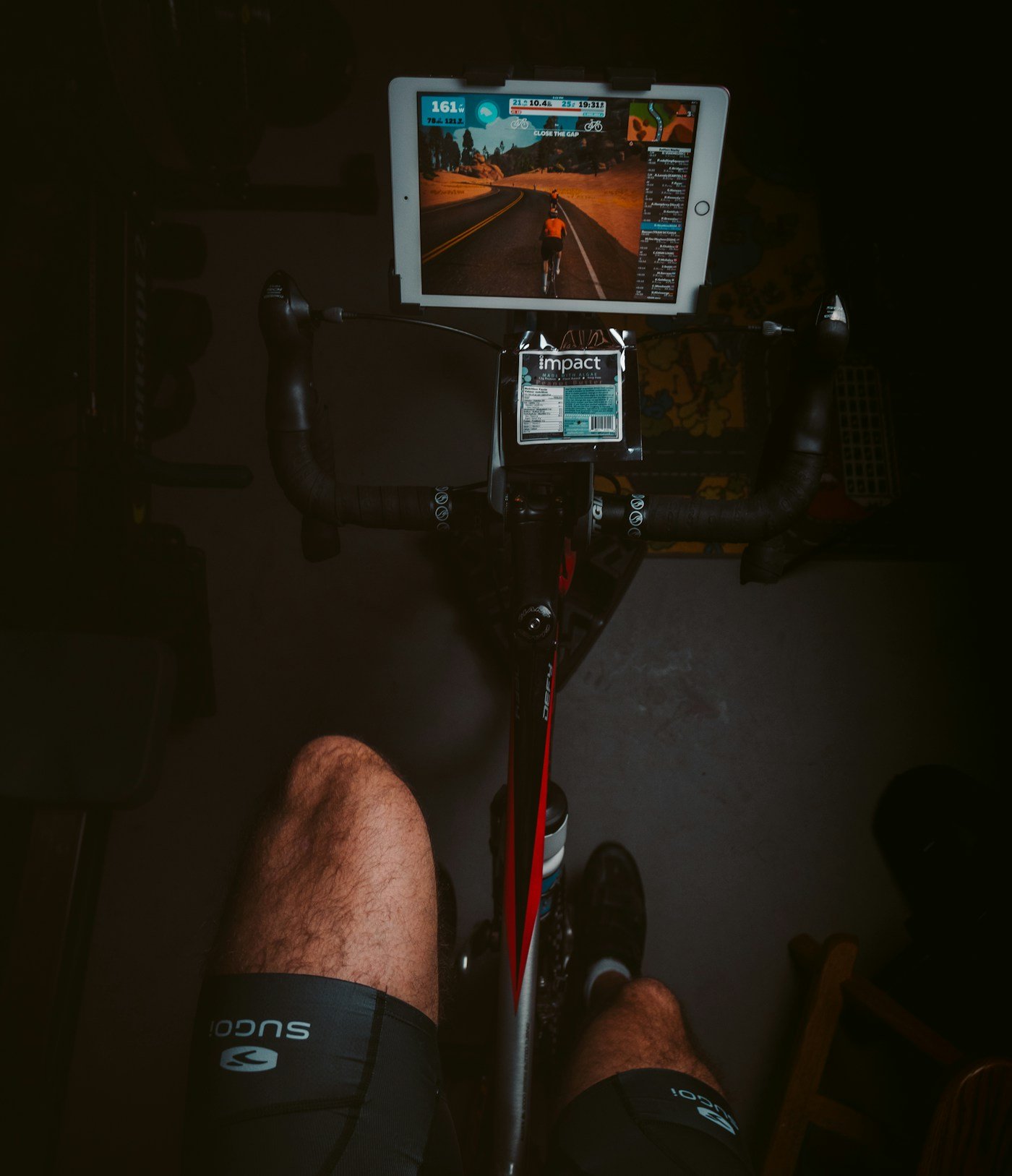
Direct-drive trainers are the only serious option for structured indoor training in 2026. They’re quieter than wheel-on units, measure power to ±1–2% accuracy, and integrate seamlessly with Zwift, TrainerRoad, and Wahoo SYSTM. The five below cover every budget — from the most accurate trainer money can buy down to a $399 workhorse that outperforms trainers twice its price.
Quick Comparison
All 5 Trainers at a Glance
| Trainer | Price | Accuracy | Max Power | Max Grade | Best For |
|---|---|---|---|---|---|
| Wahoo KICKR V6 | $999 | ±1% | 2,200W | 20% | Overall Best |
| Garmin Tacx Neo 3M | $1,899 | ±1% | 2,200W | 25% | Quietest / Premium |
| Wahoo KICKR Core 2 | $599 | ±2% | 1,800W | 16% | Best Value |
| Elite Direto XR-T | $699 | ±2.5% | 2,300W | 24% | Best Mid-Range |
| Saris H3 Plus | $399 | ±2% | 2,000W | 20% | Best Budget |
Pick #1 — Best Overall
Wahoo KICKR V6
01 / BEST OVERALL
Wahoo KICKR V6Top Pick
~$999
The KICKR V6 is the trainer most serious indoor cyclists end up with, and for good reason. Wahoo added WiFi connectivity to this generation (significantly more stable than Bluetooth for long ERG sessions), the AXIS motion system that lets the bike rock side to side on the KICKR’s four feet, and the ERG Easy Ramp feature that eases you back into a block after a forced break. None of these are gimmicks — WiFi eliminates the mid-workout drops that plagued earlier trainers, and the lateral movement makes a real difference on long climbs.
At ±1% power accuracy measured by third-party labs, the KICKR V6 matches the Tacx Neo 3M for precision at nearly half the price. Noise sits at 58 dB at 250W — the equivalent of a normal conversation — rising to 64 dB at high power outputs. It handles 20% grade simulation smoothly, which covers every climb on Zwift’s Watopia. For most riders, this is the one to buy.
Power Accuracy
±1%
Max Resistance
2,200W
Grade Simulation
20%
Noise @ 250W
58 dB
Connectivity
WiFi + BT + ANT+
Motion System
AXIS (4-foot rock)
Pick #2 — Best Premium / Quietest
Garmin Tacx Neo 3M
02 / BEST PREMIUM
Garmin Tacx Neo 3MQuietest
~$1,899
The Tacx Neo 3M is in a category of its own for two reasons: it uses an electromagnetic resistance unit (no mechanical contact at all) that makes it genuinely near-silent, and it has built-in motion plates that let the whole bike sway laterally as you climb — not just rock on feet, but actually simulate the body movement of out-of-saddle efforts. These motion plates engage your core in a way that no other trainer replicates.
The Neo 3M also simulates road texture (cobbles, packed dirt) through vibration feedback, can generate its own power for car-park warmups without a mains connection, and reaches 25% grade simulation — steeper than anything in Zwift’s main routes. At $1,899 it’s a significant investment, but for apartment riders who need silence or elite athletes who want the most realistic road feel available, nothing else comes close.
Power Accuracy
±1%
Max Resistance
2,200W
Grade Simulation
25%
Noise Level
Near-silent (EM)
Motion System
Built-in plates
Power-Free Use
Yes (warmup)
Pick #3 — Best Value
Wahoo KICKR Core 2
03 / BEST VALUE
Wahoo KICKR Core 2Best Value
~$599
The KICKR Core 2 is the result of Wahoo’s partnership with Zwift — it ships with the option to use a Zwift Cog instead of a traditional cassette, eliminating the cassette-swapping headache when switching between bikes with different drivetrains. For new indoor cyclists, this is the smart choice: you get Wahoo’s proven hardware, WiFi connectivity, and Race Mode (which disables ERG smoothing for more raw sprint power response) at $400 less than the KICKR V6.
The step down from V6 is primarily accuracy (±2% vs ±1%) and maximum resistance (1,800W vs 2,200W). For riders training below 4 W/kg, neither difference will ever be noticeable in practice. The Core 2 also lacks the AXIS motion feet, so the ride feel is slightly more static. But for a rider just starting out on Zwift or setting up a home training space for the first time, the Core 2 is the right call.
Power Accuracy
±2%
Max Resistance
1,800W
Grade Simulation
16%
Connectivity
WiFi + BT + ANT+
Zwift Cog
Optional (included)
ERG Mode
Yes + Race Mode
Pick #4 — Best Mid-Range
Elite Direto XR-T
04 / BEST MID-RANGE
Elite Direto XR-T
~$699
The Direto XR-T sits between the KICKR Core 2 and KICKR V6 in price but actually beats both on two specs: maximum resistance (2,300W) and maximum grade simulation (24%). This makes it the best choice for riders doing high-power interval training or riding routes like Alpe du Zwift where steep gradient changes are constant. The ERG mode response is smooth and consistent — it tracks target power without the surging that cheaper trainers can exhibit during hard efforts.
The trade-off is accuracy: ±2.5% vs ±1–2% for the Wahoo options. For recreational and mid-level athletes, that half-a-percent difference is completely irrelevant. Elite’s software and app ecosystem is less polished than Wahoo’s, but direct Zwift, TrainerRoad, and ANT+ FE-C compatibility means it works flawlessly with the platforms most riders use. If you want more resistance and steeper simulated climbs than the KICKR Core 2 offers, the Direto XR-T is the upgrade to make.
Power Accuracy
±2.5%
Max Resistance
2,300W
Grade Simulation
24%
Connectivity
BT + ANT+
ERG Mode
Smooth / Stable
WiFi
No
Pick #5 — Best Budget
Saris H3 Plus
05 / BEST BUDGET
Saris H3 Plus
~$399
The Saris H3 Plus is the best budget direct-drive trainer available in 2026. At $399 — discounted from $649 — it delivers specs that compete directly with trainers twice the price: ±2% accuracy, 2,000W max resistance, 20% grade simulation, and a 20-lb (9.1 kg) precision-balanced flywheel that creates more inertia and a more realistic road feel than the lighter flywheels in competing budget units. The 59 dB noise level matches the KICKR V6 closely.
Saris is an American brand (Madison, Wisconsin) with a strong reputation for build quality and durability, and the H3 Plus is their flagship direct drive unit — not a budget compromise. It uses ANT+ FE-C and Bluetooth FTMS, so it works with every major training app without configuration. The one limitation: no WiFi, and the ERG mode step-changes are slightly slower than Wahoo’s. For a rider who wants a reliable, quiet, well-built trainer without paying premium prices, the H3 Plus is the clearest recommendation on this list.
Power Accuracy
±2%
Max Resistance
2,000W
Grade Simulation
20%
Flywheel
20 lb / 9.1 kg
Noise Level
59 dB
Connectivity
BT + ANT+ FE-C
Our Recommendation
Which Smart Trainer Should You Buy?
Start with your budget and work from there:
Under $400: Saris H3 Plus without question. At $399 you’re getting a trainer that competes with units at $699. The heavy flywheel and clean ERG mode make it a serious training tool, not an entry-level compromise.
$500–$700: Wahoo KICKR Core 2 if you prioritize software and Zwift integration. Elite Direto XR-T if you want higher max power and steeper grade simulation. Both are strong; the deciding factor is whether you ride Zwift (KICKR Core 2) or do high-power threshold work (Elite).
$900–$1,000: Wahoo KICKR V6. The WiFi stability, ±1% accuracy, and AXIS motion system are meaningful upgrades over the Core 2 for riders training 4+ hours per week indoors. Worth every dollar of the premium over the Core 2 at this training load.
$1,500+: Garmin Tacx Neo 3M only if silence is non-negotiable (apartment, sleeping partner, early morning sessions) or if you’re doing professional-level testing and need the built-in motion platform. Otherwise, the KICKR V6 is a better buy at nearly half the price.
Don’t forget: A rubber anti-vibration mat under any trainer dramatically reduces noise transmission to floors. Essential for apartment use and worth the $20–$40 regardless of which trainer you buy.
Once you’ve found the right bike, the next step is the right setup. Our Best Road Bikes 2026 guide covers five picks from $1,250 to $3,299 — endurance, all-round, and entry-level, all disc-equipped with Shimano 105 or above.
Indoor training on a smart trainer is one of the most efficient ways to build Zone 2 volume. Our How to Lose Weight Cycling guide covers training zones, weekly volume, nutrition timing, and the compensation mistakes that cancel most cyclists’ fat-loss efforts.
FAQ
Training indoors for performance? Pair your trainer sessions with the right fuel — What to Eat Before and After Cycling.
Common Questions
What’s the difference between a direct-drive and wheel-on smart trainer?
A direct-drive trainer requires you to remove your rear wheel and attach the bike via a cassette. It’s quieter, more accurate (±1–2% vs ±3–5%), and gives a more realistic road feel. Wheel-on trainers are cheaper and lighter but wear your tire and measure power less accurately. For Zwift and structured training, direct-drive is the right choice for anyone riding more than twice a week.
Do all smart trainers work with Zwift?
Yes — any ANT+ FE-C or Bluetooth FTMS trainer works with Zwift, covering every trainer in this list. Wahoo trainers use a native protocol that Zwift recognizes instantly; the Tacx Neo 3M works equally well via Garmin’s Zwift partnership. The KICKR Core 2 ships with a Zwift Cog option that eliminates cassette compatibility issues entirely.
How loud is a smart trainer?
Direct-drive trainers range from near-silent (Tacx Neo 3M, electromagnetic motor) to about 64 dB at high power — roughly the volume of a normal conversation. The KICKR V6 measures 58 dB at 250W. The Saris H3 Plus measures 59 dB. All are significantly quieter than wheel-on trainers. Add a rubber anti-vibration mat to further reduce sound transmission through the floor.
Do I still need a power meter if I have a smart trainer?
No. Every direct-drive trainer on this list measures power internally to ±1–2.5% accuracy, which is sufficient for structured training and FTP testing. A separate power meter is only worth adding if you want consistent data across both indoor and outdoor rides — for tracking training load in apps like Training Peaks or Intervals.icu.
Which smart trainer is best for small apartments?
The Garmin Tacx Neo 3M is the best choice for noise-sensitive environments — its electromagnetic motor is genuinely near-silent, making it apartment-safe even at high outputs. The KICKR V6 (58 dB) and Saris H3 Plus (59 dB) are close behind. Pair any direct-drive trainer with a rubber anti-vibration mat to cut impact sound significantly.
© 2026 CyclistStyle · All rights reserved
3 Responses