What Is a Commuter Bike? Features, Types and How to Choose
A commuter bike is less a single type of bike than a bike set up for everyday trips. Here is what makes one, the main types, and how to pick the right one for your route.
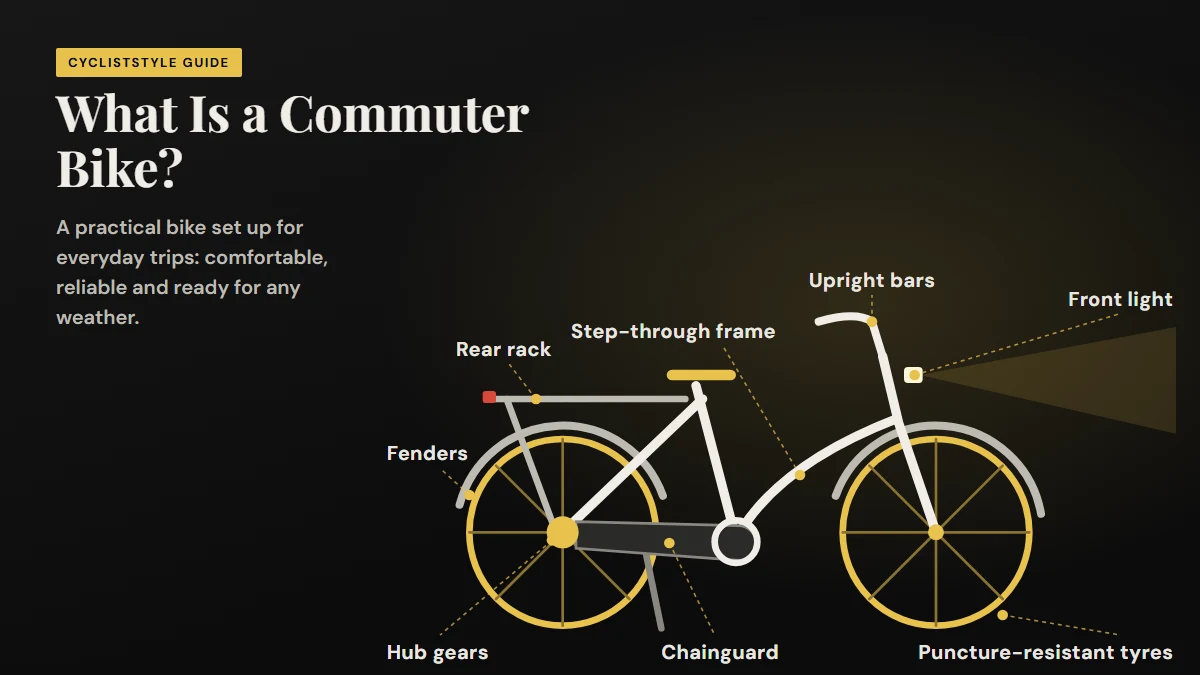
What is a commuter bike? A commuter bike is any bicycle set up for regular, practical trips such as riding to work, school or the shops. It puts comfort and reliability ahead of speed, with an upright riding position, fenders, a rack, lights, durable tyres and low-maintenance gears. Hybrids, city bikes, folding bikes and e-bikes are the most common choices.
Unlike a road bike or a mountain bike, a commuter bike is defined by what you do with it, not by one frame design. Wikipedia files it under the broader idea of the utility bicycle: a bike built for transport rather than sport or racing. That is why two very different bikes, a Dutch city bike and a folding bike, can both be excellent commuters.
What they share is a set of practical features that make riding in normal clothes, in traffic and in bad weather easy. Once you know those features, choosing a commuter bike gets much simpler.
7 Features That Make a Commuter Bike
Types of Commuter Bikes
Most commuter bikes fall into six groups. The right one depends on how far you ride, how hilly your route is and where you keep the bike.
| Type | Best for | Trade-off |
|---|---|---|
| Hybrid bike | Mixed city streets and paved paths | Light and versatile, but often sold without fenders or a rack. |
| City / Dutch bike | Short, flat trips in normal clothes | Very upright and fully equipped, but heavy and slow on hills. |
| Folding bike | Train or bus commutes and small flats | Folds to fit under a desk; small wheels feel less stable at speed. |
| Electric (e-bike) | Long or hilly commutes, arriving without sweat | Motor assist makes distance easy, but costs more and weighs more. |
| Road / gravel bike | Longer, faster commutes | Quick and efficient, with a lower, sportier position. |
| Single-speed | Flat routes and minimal maintenance | Simple and cheap to run, but hard work on hills. |
If you like the idea of a motor, our guide to the best e-bikes of 2026 covers commuter and city models. If you are torn between a fast road bike and a more rugged option for mixed surfaces, read road bike vs gravel bike.
Commuter Bike vs Hybrid Bike vs Road Bike
These three overlap, which is where most of the confusion comes from. Here is how they compare for daily riding:
| Commuter bike | Hybrid bike | Road bike | |
|---|---|---|---|
| Riding position | Upright | Mostly upright | Low and stretched |
| Fenders and rack | Usually included | Mounts, often sold without | Rarely; few mounts on race bikes |
| Tyres | Wide, puncture-resistant | Medium width, light tread | Narrow and fast |
| Gears | Hub gears, single speed or derailleur | Derailleur | Derailleur |
| Best for | Daily trips in normal clothes | Fitness rides and mixed use | Speed and longer distances |
In short, a hybrid can become a commuter bike once you add fenders, a rack and lights. A purpose-built commuter simply arrives with them.
How to Choose a Commuter Bike
Looking for a specific model? Our picks for the best women’s commuter bikes compare five options for different budgets and riding styles.
Do You Need a Dedicated Commuter Bike?
Not necessarily. If you already own a bike that fits you, you can turn it into a commuter bike with a few additions:
- Fenders that clip on or bolt to the frame’s mounts.
- A rack and pannier, or a basket for short trips.
- Front and rear lights you leave on the bike.
- Slick or semi-slick tyres if your bike has knobbly mountain bike tyres.
- A solid lock. See the best bike locks and how to use them properly.
Buy a dedicated commuter bike when your current bike is uncomfortable for daily use, cannot take fenders or a rack, or is too valuable to leave locked outside all day.
Essential Gear for Bike Commuting
Whatever bike you choose, a few items make every commute safer and easier:
- A helmet that fits. Compare options in our best bike helmets guide.
- Lights and reflective details for dark mornings and evenings.
- A lock that suits where you park and for how long.
- Clothes you can ride in. For style ideas that work on and off the bike, see our city cycling outfit guide.
Riding in traffic for the first time? The League of American Bicyclists’ Smart Cycling program teaches safe road riding, and many local shops and clubs run commuter classes. If you are new to riding altogether, start with how to ride a bike.
What Is a Commuter Bike: FAQ
What is the difference between a commuter bike and a hybrid bike?
A hybrid is a general-purpose bike for paved roads and light trails. A commuter bike is set up for daily transport, usually with fenders, a rack, lights and a low-maintenance drivetrain. Many commuter bikes are hybrids with those extras added.
Can I use a road bike or a mountain bike for commuting?
Yes. Any bike that fits you and suits your route can be a commuter bike. A road bike is fast on long routes; a mountain bike is comfortable but slower on pavement because of knobbly tyres. Fitting fenders, lights and slick tyres helps either one.
Is an e-bike a good commuter bike?
For long or hilly commutes, often yes. The motor lets you ride further and arrive without being sweaty. The trade-offs are a higher price, more weight and a battery to charge. REI’s e-bike guide lists urban, hybrid, cargo and folding e-bike styles.
Is a single-speed bike good for commuting?
On flat routes, a single-speed is one of the simplest and most reliable commuter bikes, with almost nothing to adjust. On hilly routes, hub gears or a derailleur make the ride much easier.
What should I look for in a commuter bike?
An upright position, fenders, a rack or rack mounts, lights, durable puncture-resistant tyres and a low-maintenance drivetrain. Above all, make sure the bike fits you and suits your route.
Is commuting by bike good exercise?
Yes. Regular riding is moderate aerobic exercise that fits into time you already spend travelling. You can ride gently to arrive fresh, or push harder on the way home.
2 Responses