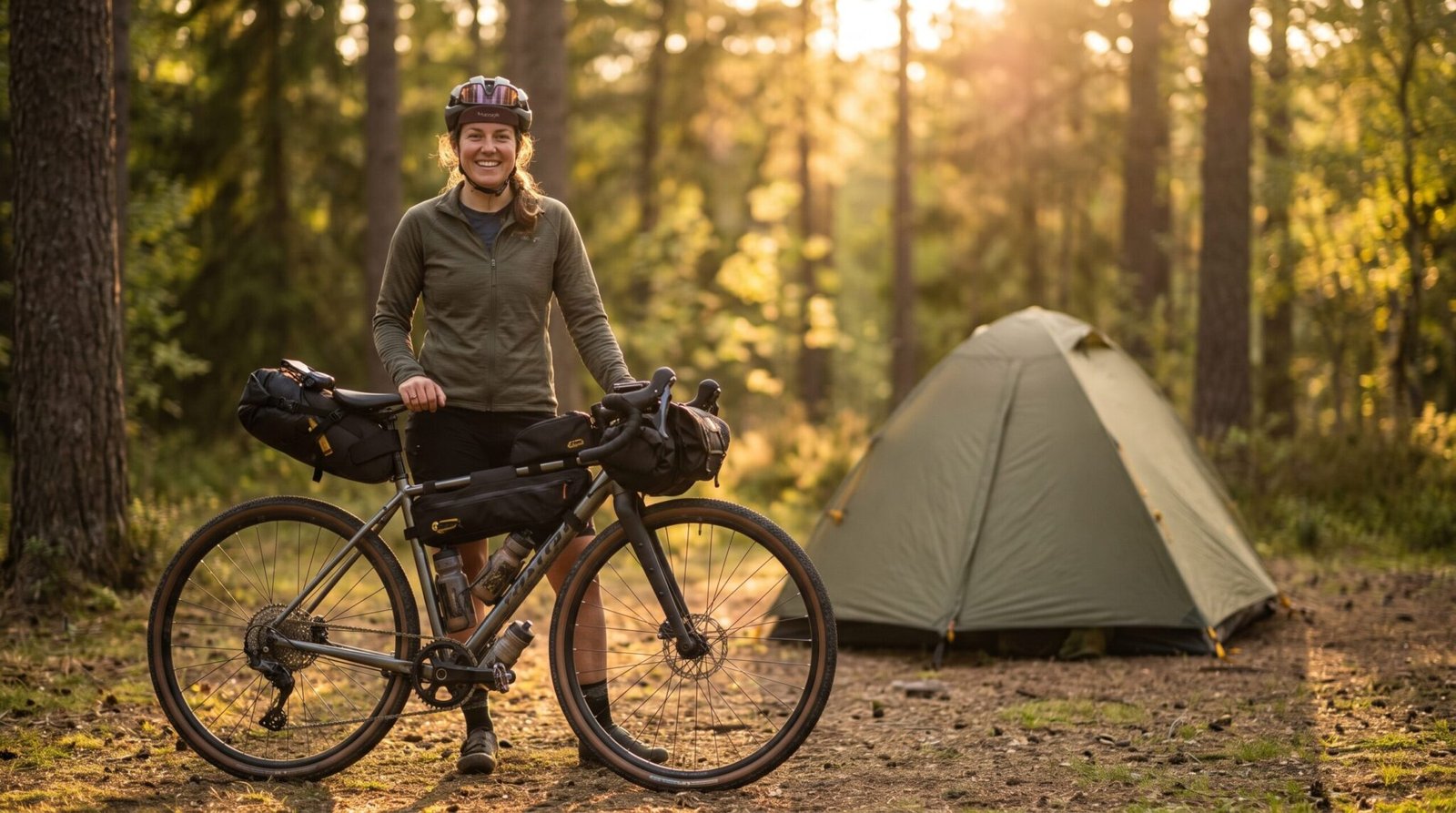
How to Start Bikepacking for Women: Beginner Guide + Gear Checklist
Starting bikepacking for women doesn’t require a new bike, an expensive setup, or a solo expedition on day one. It requires a bike you already trust, one overnight route close to home, and a handful of gear decisions that matter more than the rest. This guide walks through the actual first steps, the solo-riding safety questions worth answering before you leave, and a gear checklist sized for a genuine beginner.
CyclistStyle is reader-supported. Some links below are Amazon affiliate links — if you buy through them, we may earn a small commission at no extra cost to you.
Ride the bike you already own on a loaded overnight route within an hour of home before buying anything new. Tell someone your route and check-in time. Prioritize a comfortable saddle and padded shorts over any other gear decision — discomfort, not equipment, is what ends most first bikepacking trips early.
1. How to Start Bikepacking: 5 Steps for Beginners
Most people overcomplicate their first bikepacking trip by researching gear for months before ever loading a bike. These five steps get you out the door faster and tell you far more than another gear review will.
Use the bike you already have
A gravel, hybrid, or even a road bike with wider tires can handle a first overnight route. Don’t wait for the “right” bike — find out what you actually need on a real trip first.
Pick a route with a bailout option
Choose a loop or out-and-back within 15–30 miles of home, ideally with a town or transit option partway through. If something feels wrong, you want an easy way out, not a 60-mile ride back.
Do one loaded practice ride first
Pack your bags exactly as planned and ride 5–10 miles near home before the actual trip. This is where you find out a bag rubs your knee or your saddle isn’t right — while you’re still five minutes from your door.
Book a campsite or known spot for night one
Skip the fully wild, unknown-terrain camp for your first trip. A reservable campsite or a spot you’ve already scouted removes one major variable while you’re still learning everything else.
Share your route and a check-in time
Send your planned route and expected return time to someone before you leave. This single habit matters more than almost any piece of gear on this list.
2. Solo-Riding Safety Considerations
Solo bikepacking safety for women gets asked about constantly, and most of the real answer is procedural, not gear-based — though a couple of items genuinely help.
- Share your plan. Route, expected return time, and a check-in call or text at a set point — not just “I’ll text if something happens.”
- Ride routes with some traffic or towns nearby for your first several trips, rather than fully remote backcountry.
- Trust the decision to turn back. A route that feels wrong once you’re on it is not a route you need to finish.
- Carry a way to call for help that doesn’t depend on cell signal alone if you’re heading anywhere remote — a charged phone plus a personal alarm covers most situations near towns.
- Connect with other bikepackers through local cycling clubs or women’s riding groups before going fully solo — a first group overnight is a low-pressure way to learn the logistics.
Personal Safety Alarm Keychain — Solo-Riding Essential
130dB Siren · LED LightA 130-decibel siren and LED light on a keychain clip — loud enough to draw attention from a real distance, and small enough to clip to a handlebar bag or jersey pocket without adding noticeable weight.
Check Price on Amazon →3. The Beginner Gear Checklist
The full bag-by-bag breakdown — frame bags, seat packs, water filter, multi-tool — is already covered in our Best Bikepacking Gear 2026 guide, so this list sticks to what a genuine first-timer needs and what that guide doesn’t cover.
- Storage: a seat pack and a top tube bag are enough for one night — see the full bag guide above before buying a complete set
- Water filtration and a compact multi-tool — also covered in the gear guide above
- Shelter: a lightweight, freestanding 1-person tent (below) if you don’t already have one
- Comfort: a saddle that actually fits you (below) and padded shorts — see our women’s cycling gear guide for tested picks
- Safety: a personal alarm (above) and a shared route plan
WTB Deva Saddle — Best Beginner Saddle Upgrade
Women-Specific · Chromoly RailsSaddle discomfort ends more first bikepacking trips than any equipment failure. The Deva is one of WTB’s most established women-specific saddles — a flat profile that allows several seated positions on a long day, with enough padding for multi-hour rides without being overbuilt.
Check Price on Amazon →Clostnature 1-Person Tent — Best Beginner Shelter
~4.2 lbs · FreestandingFreestanding means it pitches without relying on staked-out guylines alone — useful on hard ground or a small campsite pad where staking is awkward. Aluminum poles and a straightforward setup make it a reasonable first tent without needing prior camping experience.
Check Price on Amazon →4. Bikepacking for Women FAQ
Do I need a special bike to start bikepacking?
No. A gravel, hybrid, or road bike with room for slightly wider tires is enough for a first overnight trip. Find out what your actual riding demands before buying a dedicated bikepacking bike.
Is it safe to bikepack alone as a woman?
Many women bikepack solo regularly. The real safety factors are procedural: sharing your route and a check-in time, choosing routes with some traffic or towns nearby for early trips, and trusting your instinct to turn back if something feels wrong.
What’s the most common mistake first-time bikepackers make?
Overpacking, and skipping a loaded practice ride. A short loaded ride near home reveals saddle, bag, and fit problems while you’re still minutes from home instead of miles into an actual trip.
How do I choose a saddle for bikepacking specifically?
Prioritize a saddle already proven comfortable on rides of 2+ hours over one marketed specifically for bikepacking. Women-specific saddles like the WTB Deva address sit-bone width and pressure differently than unisex saddles, which matters more on a loaded, multi-hour ride.
5. The Verdict
Our Take
Starting bikepacking for women comes down to removing excuses, not buying gear. Ride the bike you own, on a route with a bailout, for one night, and tell someone your plan. Add a comfortable saddle and a personal alarm before you add anything else — then use our full gear guide once you know what your own riding actually demands.