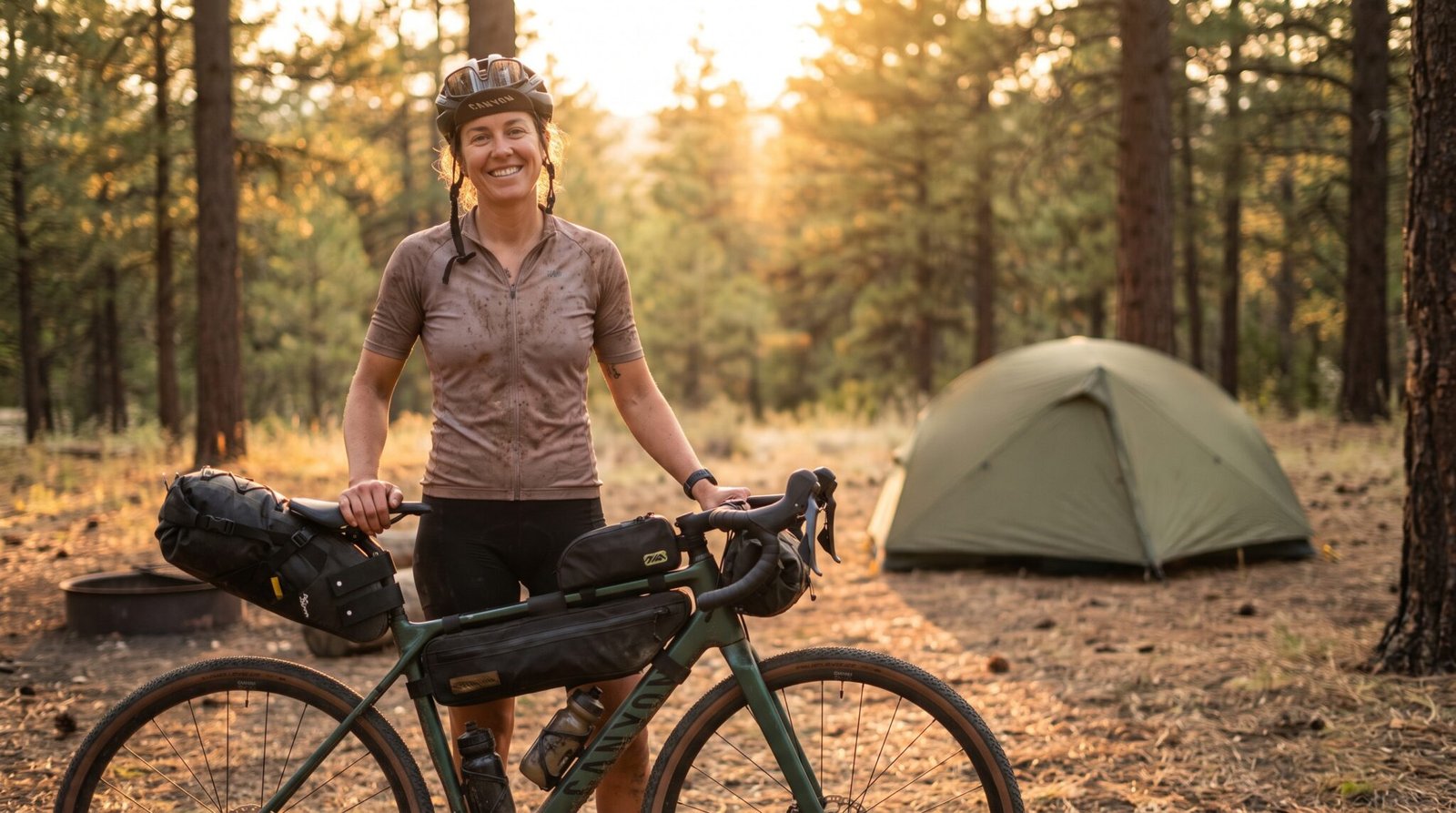
10 Bikepacking Mistakes to Avoid (And What to Do Instead)
The most common bikepacking mistakes have almost nothing to do with expensive gear and almost everything to do with a handful of small, repeated decisions — how much you pack, how you test it, and how honestly you plan the route. Fix these ten and your next trip goes noticeably better than your last one, regardless of what bike or bags you’re using.
CyclistStyle is reader-supported. Some links below are Amazon affiliate links — if you buy through them, we may earn a small commission at no extra cost to you.
Most bikepacking mistakes come from skipping a loaded practice ride, packing more than the trip actually needs, and planning a route with no easy way out if something goes wrong. Fix those three first — the rest of this list matters, but those three cause the most ruined trips.
The 10 Most Common Bikepacking Mistakes
These ten show up on nearly every account of a rough first bikepacking trip, in some combination. None of them require new gear to fix — most just require doing one thing differently before you leave.
Mistake 1
Overpacking “just in case”
Every extra item feels reasonable alone, but they add up to a bike that handles badly on climbs and descents, and bags that are harder to pack every single morning.
The Fix
Lay everything out before you leave and remove anything you can’t name a specific use for. If you didn’t use it on your last trip, it probably doesn’t need to come on this one.
Mistake 2
Skipping the loaded practice ride
The single most common mistake: packing bags for the first time on the morning of the actual trip. Rubbing, poor balance, and saddle problems all show up in the first hour — usually far from home.
The Fix
Ride 5–10 miles near home with your bike fully loaded exactly as planned, at least once before the real trip. Fix whatever goes wrong while you’re still minutes from your door.
Mistake 3
Loading weight high and to the rear
A heavy seat pack combined with a heavy handlebar roll raises the bike’s center of gravity and makes low-speed handling noticeably worse, especially on loose gravel or singletrack.
The Fix
Put your heaviest items — tools, food, water — in the frame bag, low and close to the bottom bracket. Keep the seat pack and handlebar bag for lighter, bulkier items like a sleeping bag or tent.
Mistake 4
Using untested gear for the first time on the trip
A tent pitched for the first time in the dark, or a stove used for the first time at a cold campsite, turns a minor learning curve into a real problem when you’re tired and it’s already dark.
The Fix
Set up every new piece of shelter or cooking gear at home first, even just in the backyard. See our bikepacking camping gear guide for what’s actually worth packing for that first night out.
Mistake 5
Underestimating water needs
Water is heavy, so it’s tempting to carry less than you’ll actually need, especially on a route where the next refill point looks close on the map but turns out to be closed or dry.
The Fix
Carry more capacity than you think you need for the gap between refill points, and treat a squeeze filter as a backup plan for natural sources rather than your only plan for finding water.
Mistake 6
Ignoring saddle discomfort until it’s a real problem
Minor saddle discomfort on hour one becomes genuinely trip-ending pain by hour four, and it rarely improves on its own mid-ride.
The Fix
Address saddle position and padding before the trip, not during it — a saddle height or fore-aft adjustment takes five minutes at home and can prevent the entire problem.
Mistake 7
Planning a route with no bailout option
A first or early bikepacking route that’s fully committed — no town, transit link, or shorter alternative partway through — turns any problem into a much bigger one.
The Fix
Choose a loop or out-and-back with a realistic exit point roughly halfway through, especially for your first several trips. You can always extend the route once you know your own pace and limits.
Mistake 8
Running the wrong tire pressure for the terrain
Road-bike pressures on loose gravel or singletrack cause the bike to bounce and skip over rough sections, which is both slower and more tiring than it needs to be on a loaded bike.
The Fix
Drop pressure a bit lower than your normal unloaded setting for the terrain you’re riding, since the extra bag weight already adds effective load to the tires.
Mistake 9
No plan for a change in weather
A forecast that looked fine at the start of the day can shift by afternoon, and a loaded bike with no rain layer or shelter contingency makes a wet, cold evening far worse than it needs to be.
The Fix
Pack one genuine rain layer and know your camp or shelter plan for a worse-than-forecast scenario, even on a route where good weather looks likely.
Mistake 10
No backup power for electronics
A dead phone or GPS mid-route removes your navigation, your ability to check in with anyone, and your camera, all at once — usually right when you’d want at least one of them working.
The Fix
Carry a compact power bank sized for a full recharge of your phone and any lights or GPS unit, and start every trip with everything already topped off.
Anker 20,000mAh Power Bank — Backup Power for Electronics
Built-In USB-C Cable · 87W Fast ChargingA built-in cable means one less thing to lose in a bag, and 20,000mAh is enough for several full phone charges plus a GPS unit or bike lights across a multi-day trip.
Check Price on Amazon →Quick-Fix Reference Table
A fast reference for all ten mistakes and their fixes, useful to re-check the night before any trip:
| Mistake | Fastest Fix |
|---|---|
| Overpacking | Remove anything without a specific named use |
| Skipping the practice ride | One loaded 5–10 mile ride near home first |
| Bad weight distribution | Heavy items low, in the frame bag |
| Untested gear | Set up shelter/stove at home first |
| Underestimating water | Carry more capacity than you think you need |
| Ignoring saddle discomfort | Fix fit before the trip, not during |
| No bailout route | Loop or out-and-back with a halfway exit |
| Wrong tire pressure | Drop pressure slightly for loaded weight |
| No weather plan | Pack one rain layer, always |
| No backup power | Carry a charged power bank |
Bikepacking Mistakes FAQ
What’s the single biggest bikepacking mistake for beginners?
Skipping the loaded practice ride. Nearly every other mistake on this list — bad weight distribution, saddle discomfort, untested gear — gets caught by one short ride with your bike packed exactly as planned.
How much gear is too much for a first bikepacking trip?
If you can’t name a specific reason you’re bringing an item, it’s probably too much. Our bikepacking gear guide covers what actually earns its place in your bags.
Is it a mistake to bikepack without a filter for water?
Not always, but it removes a safety margin. If your route relies on natural water sources rather than confirmed refill points, a squeeze filter is cheap insurance against a dry or closed stop.
The Verdict
Our Take
Almost every bad bikepacking trip traces back to one of these ten mistakes, and almost none of them require spending money to fix. Do one loaded practice ride, pack lighter than feels comfortable, and build in a bailout option — then check our beginner’s guide or full gear guide for the rest of the setup.